
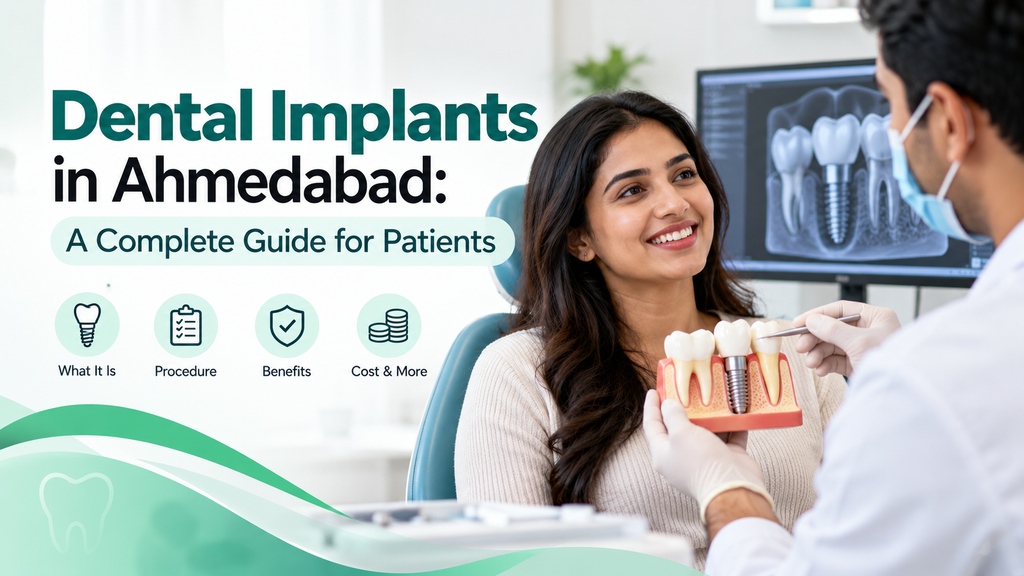
Missing teeth can affect more than just your smile. They may make chewing difficult, influence your speech, and affect your confidence in everyday situations. Whether you have lost a tooth because of decay, gum disease, an accident, or another dental problem, choosing the right replacement option is important for your long-term oral health.
Dental implants in Ahmedabad are an option worth exploring if you want to replace missing teeth with a fixed, natural-looking restoration. Dental implants act as artificial tooth roots and can support replacement teeth such as crowns, bridges or dentures.
At Shilp Dental Care, patients can discuss their missing-tooth concerns, understand the available treatment options, and learn whether dental implant treatment may be suitable for their individual needs.
In this guide, we explain how dental implants work, who may benefit from them, what the treatment process involves, how long recovery takes, and which factors influence the cost.
What Are Dental Implants?
A dental implant is a small post, commonly made of titanium, that is placed in the jawbone to act as an artificial tooth root. After the implant integrates with the surrounding bone, it can support a replacement tooth.
A dental implant restoration generally consists of three components:
- Implant: The part placed in the jawbone that acts as an artificial tooth root.
- Abutment: The connector that joins the implant to the replacement tooth.
- Crown, bridge or denture: The visible replacement used to restore the missing tooth or teeth.
Unlike a conventional tooth-supported bridge, an implant-supported crown does not usually require the neighbouring teeth to be prepared for support.
However, dental implants are not suitable for every patient. A dental examination and appropriate imaging help determine whether implants are a suitable option.
Who May Need Dental Implant Treatment?
Dental implants may be considered by people who have lost one or more teeth and want to restore their ability to chew and smile comfortably.
You may wish to discuss dental implants with a dentist if you:
- Have lost a single tooth because of injury or decay.
- Have several missing teeth.
- Find removable dentures uncomfortable or inconvenient.
- Have difficulty chewing because of missing teeth.
- Want to explore fixed alternatives to conventional dentures or bridges.
- Are concerned about changes in your smile following tooth loss.
Your suitability depends on several factors, including the condition of your gums, the amount and quality of available jawbone, your general health, and your ability to maintain good oral hygiene.
People with diabetes, gum disease, or certain medical conditions may need additional assessment before treatment. Inform your dentist about your medical history and all medicines you take.
Types of Dental Implant Treatments
The right treatment depends on how many teeth are missing, the condition of your jawbone, and your overall oral health.
1. Single Tooth Dental Implant
A single-tooth implant is used to replace one missing tooth. An implant is placed in the jawbone and, after the required healing period, supports an individual crown.
This option can restore the appearance and function of a missing tooth without generally relying on the adjacent teeth for support.
2. Multiple Tooth Dental Implants
If you have lost several teeth, your dentist may recommend individual implants or an implant-supported bridge.
The appropriate design depends on the number and position of missing teeth, the available bone, and the distribution of biting forces.
3. Full-Mouth Dental Implants
Patients who have lost most or all of their teeth may be candidates for implant-supported full-arch restorations.
Depending on the clinical situation, these restorations may use several implants to support a fixed bridge or another type of denture.
The number of implants and the type of restoration must be decided after a detailed clinical assessment.
4. Implant-Supported Dentures
Implant-supported dentures use dental implants to improve the retention and stability of a denture.
They may be removable or fixed, depending on the design. This option can be particularly useful for patients who experience movement or instability with conventional dentures.
What Are the Benefits of Dental Implants?
Dental implants can offer several benefits when they are appropriately planned, placed, and maintained.
Improved Chewing Function
Replacing missing teeth can help restore chewing function and make everyday meals more comfortable.
Natural-Looking Appearance
Implant-supported crowns and bridges are designed to complement your existing teeth. The final appearance depends on the restoration, gum condition, and individual anatomy.
Support for Jawbone Health
When a tooth is lost, the surrounding jawbone may gradually lose volume. Dental implants transfer forces to the bone and may help reduce bone loss in the area where they are placed. They cannot prevent every form of bone loss.
No Dependence on Adjacent Teeth for a Single Implant Crown
A single implant-supported crown generally does not require the neighbouring teeth to be prepared as they would be for a conventional bridge.
Long-Term Tooth Replacement Option
Dental implants can function for many years with appropriate treatment planning, oral hygiene, and professional maintenance. However, they are not guaranteed to last a lifetime and may require repairs or further treatment.
What Is the Dental Implant Procedure?
Dental implant treatment typically involves several stages. The exact process and timeline vary according to your oral health and the complexity of the case.
Step 1: Initial Consultation
The dentist examines your teeth, gums, bite, and the area where the tooth is missing. Your medical history and treatment goals are also discussed.
This appointment helps determine whether dental implants or an alternative treatment may be appropriate.
Step 2: Dental Imaging and Treatment Planning
Dental X-rays or other appropriate imaging may be required to evaluate the jawbone and nearby anatomical structures.
Your dentist uses this information to plan the implant position and the type of replacement tooth required.
Step 3: Preparation Before Implant Placement
If gum disease, tooth decay, or another oral health issue is present, it may need to be treated first.
Some patients also require a bone graft if there is insufficient bone to support an implant. This can increase the complexity and duration of treatment.
Step 4: Dental Implant Placement
The implant is placed in the jawbone using a surgical procedure, usually under local anaesthesia.
Some discomfort, swelling or bruising may occur after the procedure. Your dentist will provide instructions for managing the recovery period.
Step 5: Healing and Bone Integration
The implant needs time to integrate with the surrounding bone. This process is known as osseointegration.
Healing commonly takes several months, although the exact duration varies. Some patients may qualify for a temporary tooth or an earlier restoration, depending on the stability of the implant and other clinical factors.
Step 6: Placement of the Final Tooth
Once the implant is sufficiently stable and healing is satisfactory, the abutment and final crown, bridge or denture can be fitted according to the treatment plan.
Your dentist checks the fit, appearance and bite to ensure the restoration functions appropriately.
How Long Does Dental Implant Treatment Take?
The overall treatment duration depends on the patient’s condition and the treatment approach.
Some patients may complete treatment in a few months, while others may need additional time for bone grafting, gum treatment or healing.
The timeline can be affected by:
- The number of implants required.
- The amount of available jawbone.
- Whether a bone graft is needed.
- The condition of the gums and remaining teeth.
- Medical conditions that affect healing.
- The type of final restoration.
Your dentist can provide an estimated timeline after examining your teeth and reviewing the necessary imaging.
Is Dental Implant Surgery Painful?
Dental implant placement is generally performed under local anaesthesia, which numbs the treatment area during surgery.
You may experience pressure or vibration during the procedure. After the anaesthesia wears off, temporary soreness, swelling or bruising can occur.
The level of discomfort varies depending on the number of implants placed and whether additional procedures are needed.
Follow your dentist’s instructions regarding pain relief, oral hygiene, food choices and follow-up visits. Contact the clinic if you experience severe or worsening pain, persistent bleeding, fever or increasing swelling.
What Is the Recovery Process After Dental Implant Surgery?
Recovery is an important part of successful dental implant treatment.
During the initial healing period, your dentist may recommend:
- Eating soft foods as advised.
- Avoiding pressure on the surgical site.
- Maintaining oral hygiene carefully.
- Taking prescribed medicines as directed.
- Avoiding smoking while healing.
- Attending scheduled follow-up appointments.
The gums may heal within a couple of weeks, while the implant’s integration with the jawbone takes longer. Your dentist will tell you when the area is ready for the next stage of treatment.
Do not rush the placement of the final restoration before the implant is sufficiently stable.
What Factors Affect the Cost of Dental Implants in Ahmedabad?
The cost of dental implants in Ahmedabad varies from patient to patient. There is no single price that applies to every case.
The total treatment estimate may depend on:
1. Number of implants: Replacing one tooth differs in cost from replacing several teeth or a full arch.
2. Implant system and components: The implant system, abutment and restorative materials can influence the overall price.
3. Type of replacement tooth: A single crown, implant-supported bridge and full-arch restoration involve different materials and laboratory work.
4. Bone grafting or additional procedures: Patients who need bone grafting or preliminary dental treatment may incur additional costs.
5. Diagnostic investigations: Imaging, clinical investigations and treatment planning may contribute to the total expense.
6. Follow-up and maintenance: Ask which reviews, temporary restorations and maintenance services are included in the quotation.
When comparing dental implant treatment options in Ahmedabad, request a written treatment plan with a clear breakdown of the proposed procedures and costs. This helps you understand what is included before making a decision.
At Shilp Dental Care, you can enquire about an assessment to discuss your needs and obtain information relevant to your treatment plan.
Are Dental Implants Safe?
Dental implants are an established option for replacing missing teeth, but, like any surgical procedure, they involve potential risks.
Possible complications include infection, delayed healing, failure of the implant to integrate with the bone, nerve-related symptoms, and problems involving nearby anatomical structures. The risk varies from patient to patient.
Certain factors, including smoking, uncontrolled diabetes and untreated gum disease, may increase the risk of complications.
A thorough examination, appropriate treatment planning, good oral hygiene and regular professional reviews help manage these risks. Your dentist should explain the expected benefits, alternatives and potential complications before treatment begins.
Dental Implants vs Dental Bridges vs Dentures
The best tooth replacement option depends on your clinical needs, budget, preferences and long-term oral health goals.
| Feature | Dental Implants | Dental Bridges | Dentures |
|---|---|---|---|
| Support | Jawbone implants | Usually supported by adjacent teeth | Gums and, in some cases, implants |
| Removability | Usually fixed | Fixed | Usually removable |
| Adjacent teeth | A single implant crown generally does not require preparation of neighbouring teeth | Conventional bridges generally require preparation of supporting teeth | Usually do not require preparation of neighbouring teeth |
| Treatment time | Often several months | Depends on the case | Depends on the case |
| Maintenance | Daily cleaning and professional reviews | Daily cleaning, including under the bridge | Cleaning and periodic fit assessments |
Each option has advantages and limitations. A dentist can help you compare them and select an approach appropriate for your situation.
How Can You Maintain Your Dental Implants?
Good long-term maintenance is essential for protecting the tissues around your implant and keeping your restoration functional.
Follow these practices:
- Brush twice daily using a suitable toothbrush and fluoride toothpaste.
- Clean between your teeth and around the implant using appropriate floss or interdental cleaning tools.
- Attend regular dental check-ups and professional cleaning appointments.
- Avoid smoking.
- Follow your dentist’s instructions for implant-specific care.
- Seek professional advice if you notice bleeding gums, swelling, discomfort or movement of the restoration.
Dental implants cannot develop tooth decay like natural teeth, but the surrounding gums and bone can become diseased. Consistent care is therefore essential.
Frequently Asked Questions About Dental Implants in Ahmedabad
1. Who is eligible for dental implants?
Adults with missing teeth may be candidates if they have suitable oral health and sufficient bone to support the implants. A dentist must assess individual suitability, including medical conditions and medications.
2. How long do dental implants last?
Dental implants can last many years, but their lifespan varies. Oral hygiene, smoking, gum health, general health and regular maintenance all influence long-term outcomes. The crown or other restoration may need repair or replacement over time.
3. Can I get a dental implant immediately after tooth extraction?
In selected cases, an implant can be placed at the same appointment as tooth extraction. However, immediate placement is not appropriate for everyone. Infection, bone availability, gum condition and implant stability influence the decision.
4. Can I get dental implants if I have diabetes?
Some people with diabetes can receive dental implants. However, blood sugar control and overall health are important considerations because uncontrolled diabetes can affect healing and increase the risk of infection. Your dentist may coordinate with your treating physician when needed.
5. Do dental implants look like natural teeth?
Implant-supported crowns and bridges are designed to resemble natural teeth in shape and colour. The final result depends on the restoration design, surrounding gums and individual anatomy.
6. Are dental implants better than dentures?
Neither option is universally better. Implants may offer fixed or improved stability, while conventional dentures may be less invasive and have a lower initial cost. The appropriate choice depends on your oral health, preferences and treatment budget.
7. How do I find the right dental implant clinic in Ahmedabad?
Look for a qualified dental professional with relevant implant treatment experience, appropriate diagnostic facilities, transparent treatment planning and a clear explanation of risks, costs and follow-up care.
Arrange a consultation to understand your options rather than choosing treatment based on price alone.
Why Consider Shilp Dental Care for Your Dental Consultation?
Choosing dental treatment is an important decision. Before proceeding with dental implants, it is helpful to understand your oral health, the available treatment options and the expected treatment timeline.
At Shilp Dental Care, you can enquire about an appointment to discuss missing teeth and explore whether dental implants may be appropriate for your needs.
During your consultation, ask about:
- Your suitability for dental implants.
- The diagnostic investigations required.
- The recommended implant and restoration plan.
- The estimated treatment duration.
- The total expected cost and what it includes.
- The follow-up care and maintenance required.
Your dentist can use this information to help you make an informed decision about restoring your smile.
Book a Dental Implant Consultation in Ahmedabad
Missing teeth do not have to be ignored. Exploring suitable replacement options can help you make an informed decision about your chewing function, oral health and smile.
If you are researching dental implants in Ahmedabad, contact Shilp Dental Care to enquire about a consultation. A dental examination can help determine whether implant treatment, a bridge, dentures or another option best suits your needs.
Take the next step towards restoring your smile.
CTA Button: Book a Dental Consultation
Suggested CTA Link: Your Shilp Dental Care appointment or contact page.
Suggested Internal Links:
- Contact Us / Book an Appointment
- Dental Treatments
- Gum Disease Treatment
- Root Canal Treatment
- Dental Crowns and Bridges
Medical Disclaimer: This article is for general educational purposes only and does not replace a dental examination, diagnosis or personalised treatment advice. Dental implant suitability, risks, costs and outcomes vary by individual.